THE STORY BEHIND: Beethoven's Symphony No.6 ("Pastoral")
Share
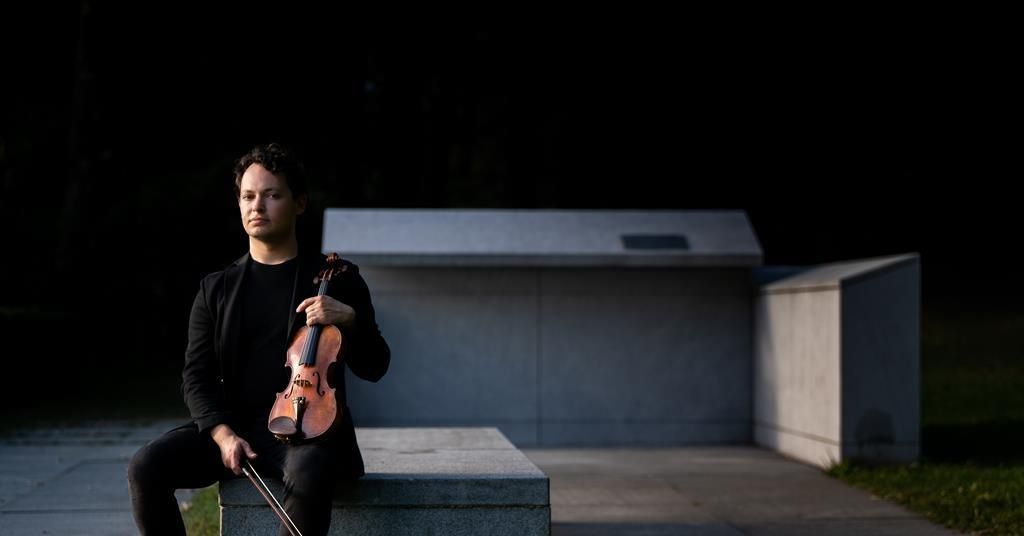
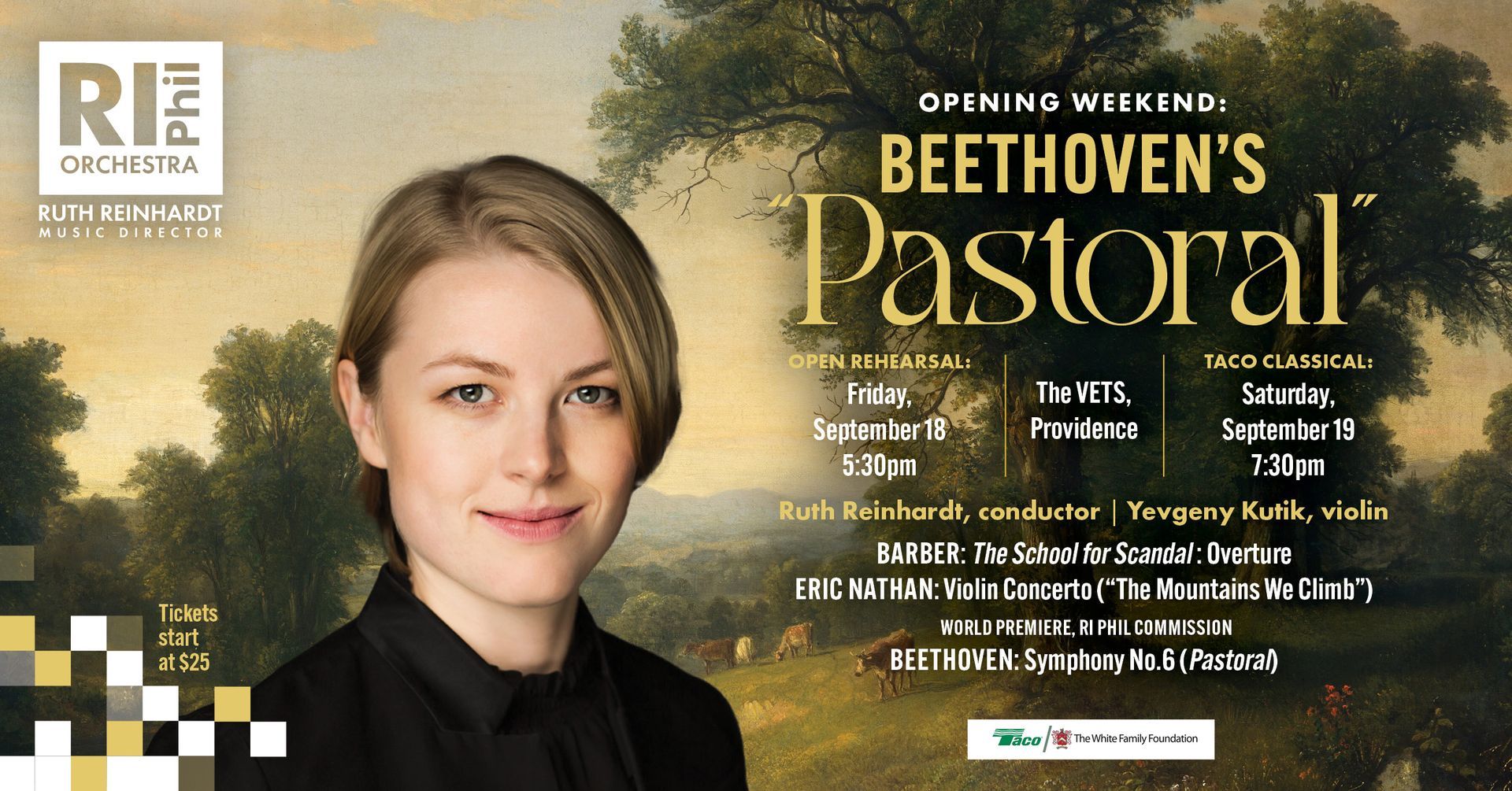
On September 18 & 19, Music Director Ruth Reinhardt and the Rhode Island Philharmonic Orchestra will present BEETHOVEN'S "PASTORAL" with violinist Yevgeny Kutik.
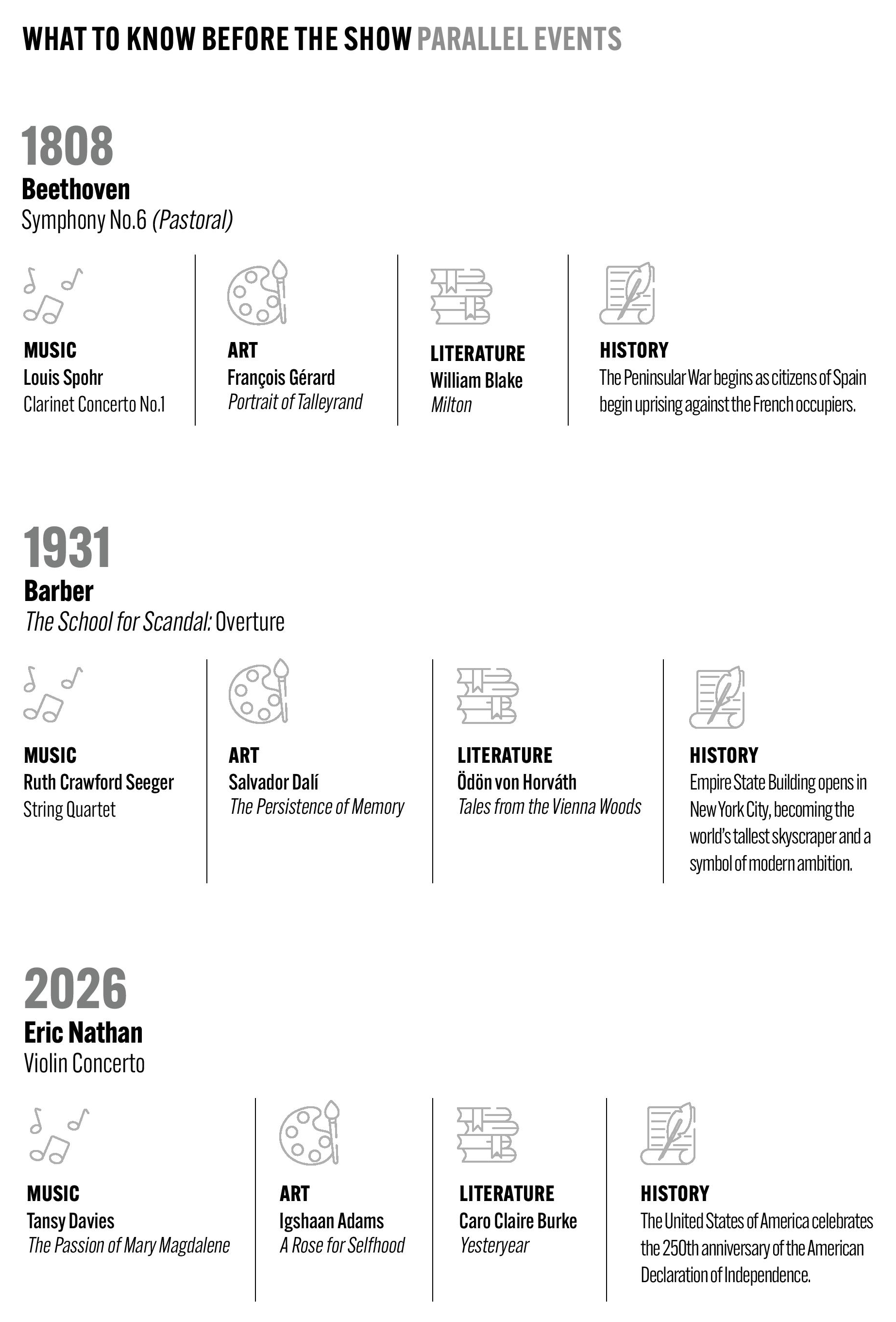
Title: Symphony No.6 in F major, op.68 (Pastoral)
Composer: Ludwig van Beethoven (1770-1824)
Last time performed by the Rhode Island Philharmonic:
Last performed October 17, 2015 with Larry Rachleff conducting. This piece is scored for piccolo, two flutes, two oboes, two clarinets, two bassoons, two horns, two trumpets, two trombones, timpani and strings.
The Story: Forever struggling with a declining sense of hearing and other physical ailments, Beethoven certainly had his own symbolic mountains to climb. But it was always in nature that he would find a reprieve from these challenges – a reprieve that allowed him the ability to glean inspiration from its healing solace.
Generally speaking, Beethoven was not one to add any sort of program notes to his own works. He was adamant that the work spoke for itself. But in the case of his Sixth Symphony, he made an exception. Musicians for the 1808 premiere at the Theater an der Wein read the following notes written directly into the score:
“Pastoral Symphony, or recollections of country life — more an expression of feeling than painting.”
“I. Awakening of cheerful feelings on arrival in the countryside”
“II. Scene by the Brook”
“III. Merry Gathering of Country Folk”
“IV. Thunder, Storm”
“V. Shepherd's song. Cheerful and thankful feelings after the storm”
This rare inclusion of descriptive words in his score reflects the fact that Beethoven’s relationship with the natural world was not a casual one. He would walk for hours through the countryside around Vienna — through forests, along streams, across fields — and he kept notes. In his sketchbooks, he wrote things like: “In the forest — I am happy — the trees speak through you — O God! — how glorious.”
It’s fortunate that, at that point in his life, Beethoven could perceive the language of the trees, as the songs of the birds had long since been silenced for him.
In the end, what Beethoven’s Pastoral symphony captures is less the sound of nature itself, but more the memory of it, the longing for it — a reconstruction made by a mind that knew exactly what it was losing. His sketchbooks from the period show that ideas for the symphony appeared as early as 1803 or before, years ahead of the 1808 completion. The work was not a sudden inspiration but a long accumulation — summer walks folded into musical notation, gradually finding their form.
It’s worth noting that Beethoven’s scoring choices here are deliberate almost to the point of being architectural. For the first three movements, the orchestra is relatively small — winds, horns, and strings, with no trumpets, timpani, or trombones. The sound is transparent, airy. Such a scoring choice gives Beethoven the freedom to deliberately mimic the amateurish playing of village musicians in the third movement: an oboe enters a beat “late”, an inept bassoon player seems capable of playing no more than two notes (which the celli and violas later mock). These people are much more intent on having a good time than polishing their technique.
And then, mid-celebration, the storm begins. There is no transition, no preparation. One moment the oboes are dancing; the next, something heavy settles in the bass and the sky changes. Timpani, trumpets, two trombones, and piccolo, all enter at once for the first time. The effect is a tonal sky change. When the storm passes and movement five begins, the orchestra retreats to something softer again.
It’s also important to note that the newly-invented clarinet - an instrument often associated with intimacy and human presence - is the warm center of this symphony. It carries the bird calls in movement two, initiates the calm at the opening of movement five, and delivers the most personal moment in the work: a brief solo in the middle of the finale, quiet and unhurried, that sounds like a man alone in a forest at the end of a long day.
Program Notes by Jamie Allen © 2026 ALL RIGHTS RESERVED.
Recommended Recordings:
There are many legendary recordings of Beethoven’s “Pastoral” Symphony. Two must haves are Bruno Walter’s stereo version with the Columbia Symphony (1958 – Sony Classical) and Karl Bohm’s with the Vienna Philharmonic (1971 – Deutsche Grammophon.) These two breathtaking accounts are lyrically phrased, poetic, and bring a natural flow to the narrative. Other accounts, nearly as fine, include George Szell with The Cleveland Orchestra (Sony Classical), Herbert von Karajan and the Berlin Philharmonic (their 1975 version on Deutsche Grammophon), and Kurt Masur’s 1974 release with the Leipzig Gewandhaus (on Phillips.) Those who stream can sample literally dozens of fine versions.
Tickets start at $25! Click HERE or call 401-248-7000 to purchase today!