THE STORY BEHIND: Mozart's Piano Concerto No.23
Share
On April 11, conductor Ken-David Masur and the Rhode Island Philharmonic Orchestra will present ALL MOZART with pianist Robert Levin.
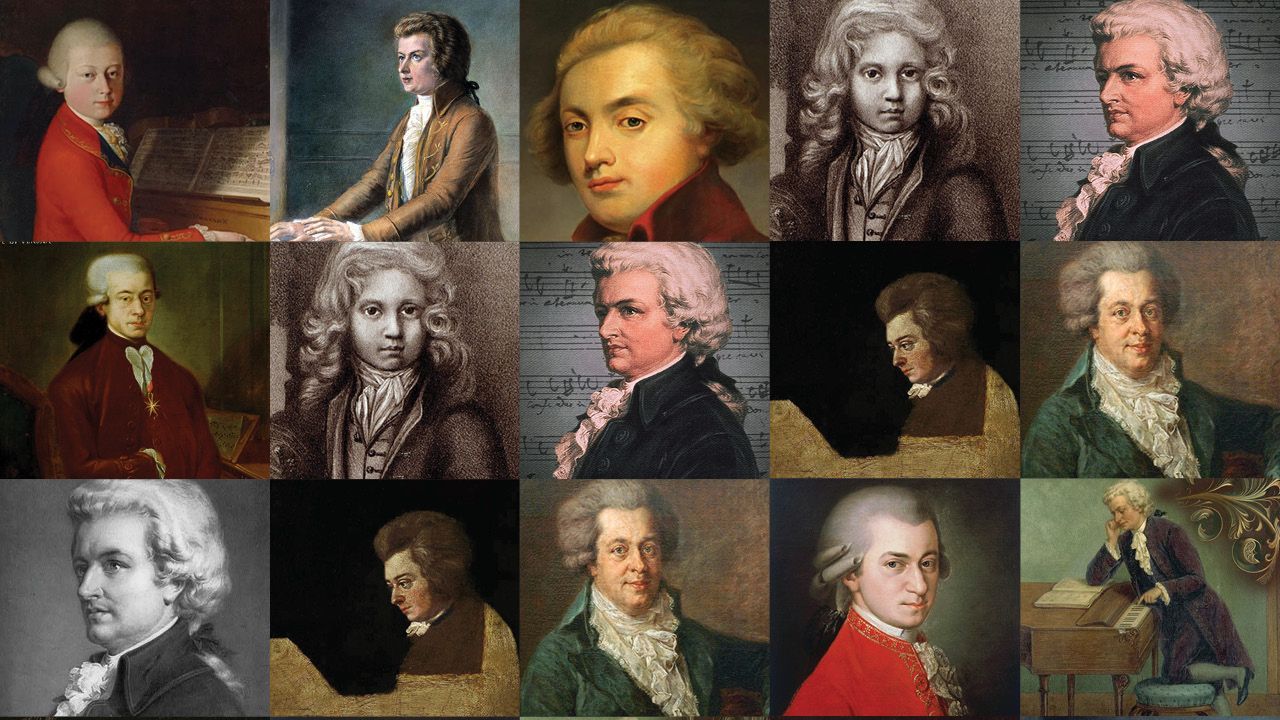
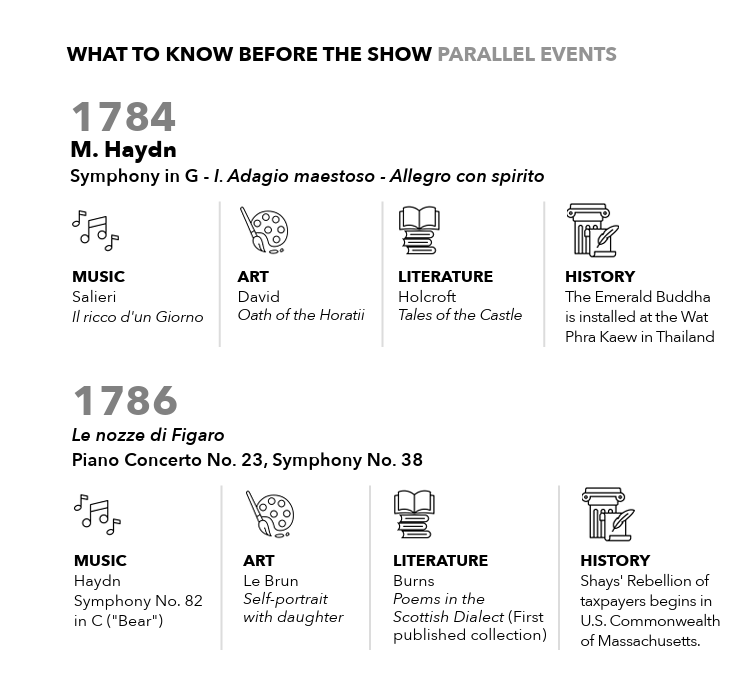
Title: Piano Concerto No.23 in A major, K.488
Composer: Wolfgang Amadeus Mozart (1756-1791)
Last time performed by the Rhode Island Philharmonic: Last performed February 26, 2005 with Larry Rachleff conducting and soloist Alon Goldstein. In addition to a solo piano, this piece is scored for flute, two clarinets, two bassoons, two horns and strings.
The Story: Mozart’s frivolous spending habits consistently placed him in financial difficulties, and he often found himself in desperate need of opportunities to concertize for wealthy patrons. Fortunately, he possessed a genius and a talent that allowed him to do so and, in the process, pen some of the most significant piano concertos in history.
All 27 of Mozart’s piano concerti are justifiably deemed masterpieces, but Nos. 23 and 24 (which Mozart most likely imagined that no one but himself would ever perform) are considered by many to be his best. It is our good luck that publishers recognized their worth after his untimely death and had the good sense to publish them for future generations to enjoy.
Mozart took full advantage of the relatively recent advent of the piano to catapult the form of the solo concerto to new heights of expressive possibilities. The sonority and tonal weight of the piano make for an equal partner to the orchestra, thus allowing Mozart (and others) to fully develop a sense of dramatic interplay between soloist and orchestra.
Dramatic interplay was, by now, second nature to Mozart. He had written quite a number of operas, the most recent of which –
The Marriage of Figaro
– enjoyed riotous success. Mozart’s innovative decision to omit trumpets and timpani, and to replace oboes with clarinets, adds to this concerto’s unique sense of drama. Despite the bright key choice of A major, the overall mood is both dark and intimate. But the key of A major has some singular acoustic properties as well, which Mozart well understood and exploited. After hearing the graceful lyricism of the concerto’s opening themes played by the orchestra, listen for the subtle sympathetic vibrations drawn from the open strings as the soloist restates them.
The second movement,
Adagio, is the only music Mozart ever wrote in the key of F#-minor, and it is some of the most poignant and pensive music Mozart would ever compose. Listen for the deeply expressive wind writing, pregnant pauses, an arching second theme that evokes a prolonged sigh, and a delicate interplay between the soloist and orchestra.
In the final movement Mozart decides that we’ve looked inward long enough, and it’s time to enjoy a good romp. Here, all the musicians on stage engage in a game of harmonic “tag,” taking the listener through unexpected key changes as themes race from one section to the other. Finally, an exciting bass drone fuels our anticipation for a satisfying ending, while the piano soars and plummets in exuberant cries of joy.
Program Notes by Jamie Allen © 2025 ALL RIGHTS RESERVED.
Recommended Recordings:
Listeners have many choices for the Mozart Piano Concerto No.23. Stephen Bishop Kovacevich (also with Colin Davis on Phillips), Alfred Brendel (Phillips), Robert Casadesus (Sony), Richard Goode (with the conductorless Orpheus Chamber Orchestra on Nonesuch), Vladimir Horowitz (his only Mozart concerto recording on Deutsche Grammophon), Murray Perahia (Sony), Arthur Rubinstein (RCA), Rudolf Serkin (Deutsche Grammophon), Mitsuko Uchida (Decca), the list goes on. Several of the above are available in collections with other Mozart Piano Concertos.
Tickets start at $25! Click HERE or call 401-248-7000 to purchase today!