THE STORY BEHIND: Ravel's "La valse"
Share
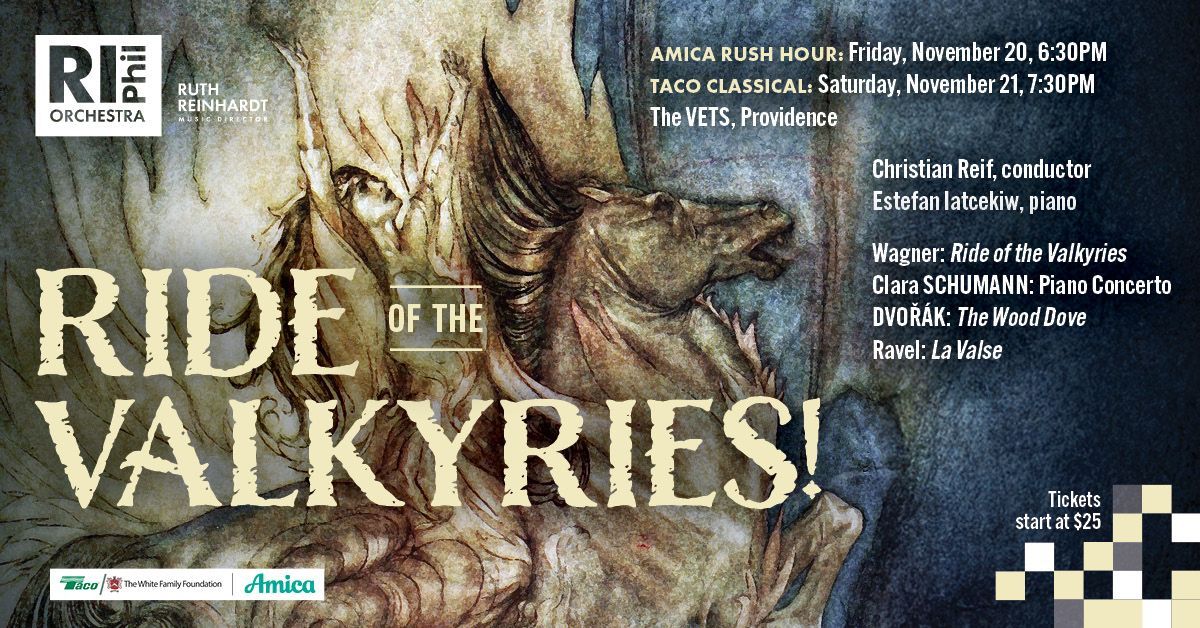
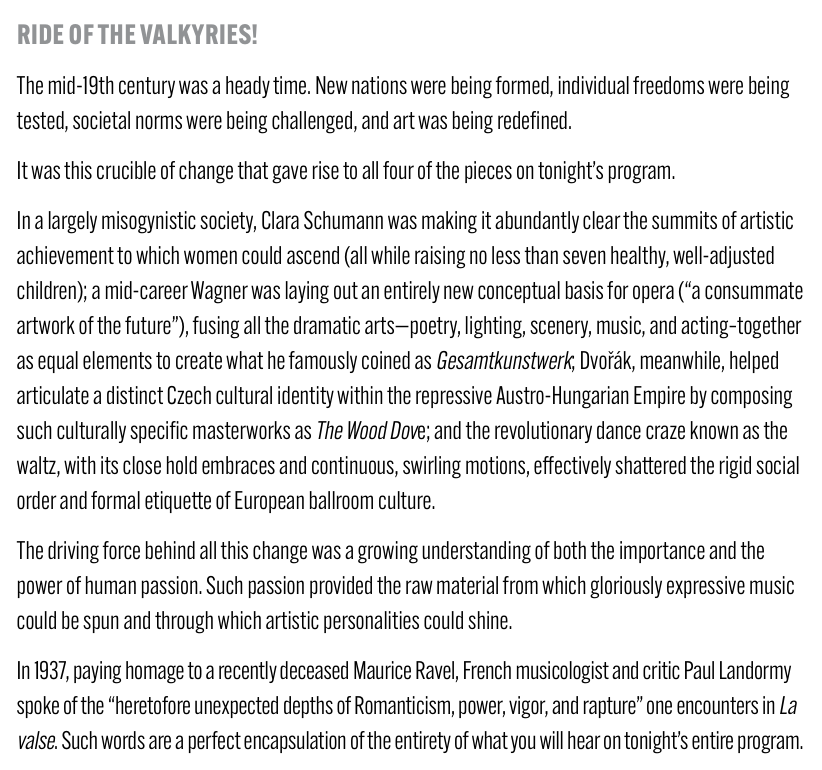
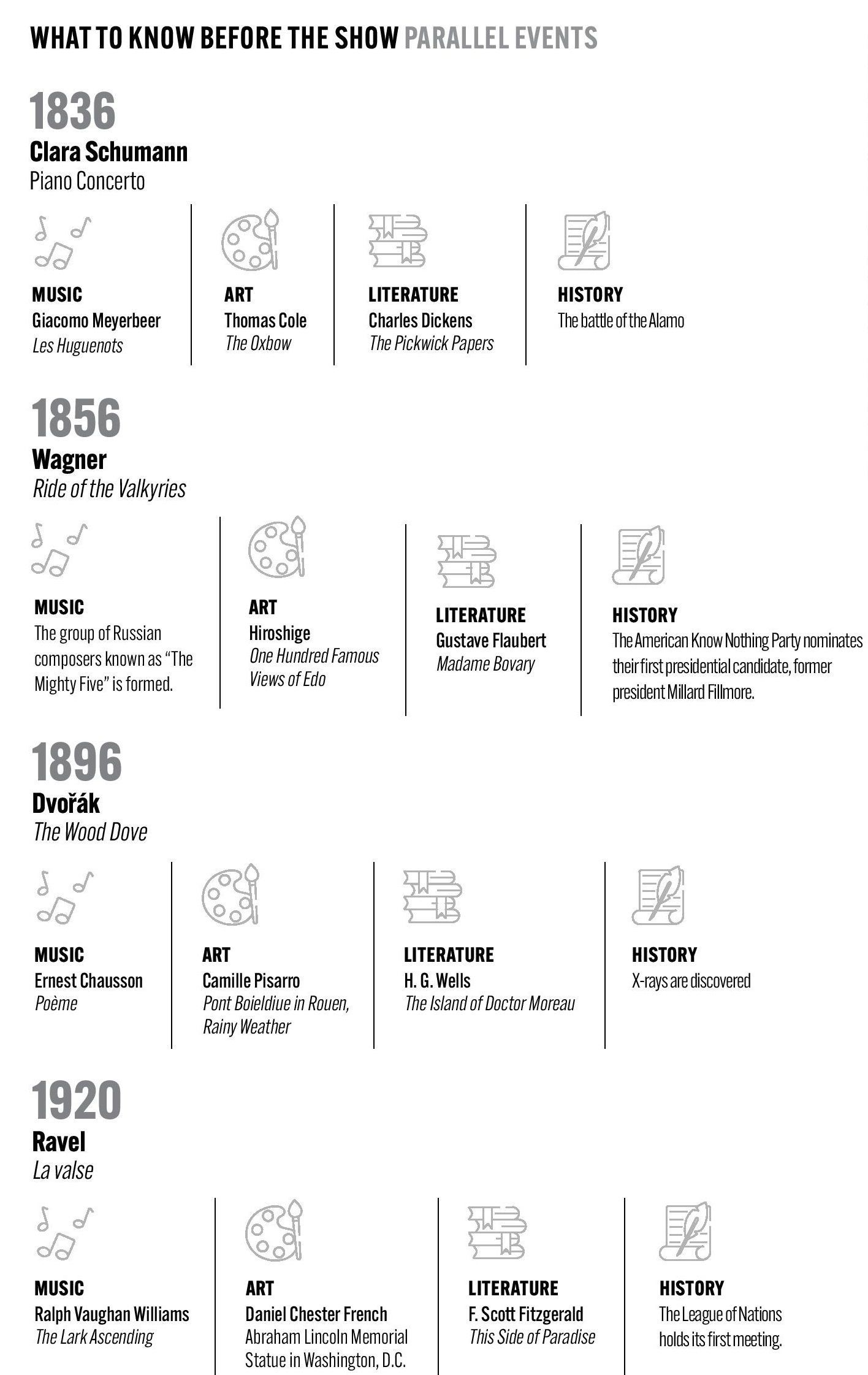
On November 20 & 21, conductor Christian Reif and the Rhode Island Philharmonic Orchestra will present RIDE OF THE VALKYRIES with pianist Estefan Iatcekiw.
Title: La valse
Composer: Maurice Ravel (1875-1937)
Last time performed by the Rhode Island Philharmonic:
Last performed November 20, 2010 with Larry Rachleff conducting. This piece is scored for piccolo, three flutes, three oboes, English horn, two clarinets, bass clarinet, two bassoons, contrabassoon, four horns, three trumpets, three trombones, tuba, timpani, percussion, two harps and strings.
The Story: The idea for
La valse dates to 1906, when Ravel first conceived of a work titled
Vienne, later
Wien—the French and German names for Vienna. He initially imagined it as a tribute to the waltzes of Johann Strauss II, and described the project as “a kind of apotheosis of the Viennese waltz, with which is mingled in my mind the idea of the fantastic whirl of destiny.” Some of that vision surfaced in his 1911
Valses nobles et sentimentales, written amid the cautious optimism of the waning days of the Austro-Hungarian Empire. Neither Ravel nor his contemporaries could foresee the looming clouds of the First World War, though his image of a “fantastic whirl of destiny” now seems strikingly prophetic.
When war broke out, Ravel felt he could no longer write a piece named after an enemy capital, so he set
Wien aside. Despite his age and a heart condition, he enlisted as a truck driver in the 13th Artillery Regiment, hauling munitions to the front. Heavy bombardment and the loss of friends and comrades took its toll. A bout of peritonitis led to intestinal surgery and then, during a painful period of recovery he learned of his mother’s death—a blow that proved devastating.
Discharged from the army and deeply depressed, Ravel spent the next several years in and out of hospitals and resisted composing—joking, perhaps bitterly, that the piano in his apartment was out of tune.
So it was that, in 1919, Serge Diaghilev—the great impresario of the Ballets Russes and champion of choreographers and composers who would revolutionize both dance and music—asked Ravel for a new ballet. The commission gave him a needed push to start composing again, and he returned to his earlier idea. It was soon clear, however, that the piece had become something far more complex than the straightforward homage he had first envisioned.
When Ravel finally played the new score for Diaghilev, the impresario declined it—but not because he didn’t like it. In fact, he called it a “masterpiece.” But he also insisted that “it is not a ballet,” rather a work
about dance. Ravel accepted the distinction, went home, and subtitled
La valse a “choreographic poem.”
The work begins in near silence, as double basses rumble and cellos and harps gradually join them. Fragmentary figures emerge and gather into a muted theme in bassoons and violas. Then the harps help propel the music toward its first full flowering: led by the violins, the orchestra bursts into the principal waltz theme.
A series of six contrasting waltzes follows, each with its own character and dynamic profile, from mild and slightly shy variations for oboe, violins, and flutes, to the triumphant song of strings as they soar above crashing cymbals and blazing brass. Sometimes tender, sometimes restless, sometimes playful, sometimes yearning, each successive waltz draws you in like a book you can’t put down. And that’s only the first half.
The second half reintroduces the earlier waltzes in altered form. We hear them all again, but now they are reshaped with unexpected modulations and changed instrumentation (listen, for instance, for material once owned by the flutes now taken over by the trumpets). And then, again, the momentum breaks. An ominous sequence steadily builds with unsettling repetitions until the orchestra drives helter-skelter toward a
danse macabre coda. The work ends with a forceful gesture that seems to shatter the waltz rhythm itself into countless shards on the floor.
Program Notes by Jamie Allen © 2026. ALL RIGHTS RESERVED.
Recommended Recordings:
As for Ravel's La valse, go straight to Charles Munch's sumptuous, frenzied 1955 Boston Symphony version on RCA (now Sony Classical.) It's plush and mesmerizing, a sound you can sink into.
Tickets start at $25! Click HERE or call 401-248-7000 to purchase today!