THE STORY BEHIND: Wagner's "Ride of the Valkyries"
Share
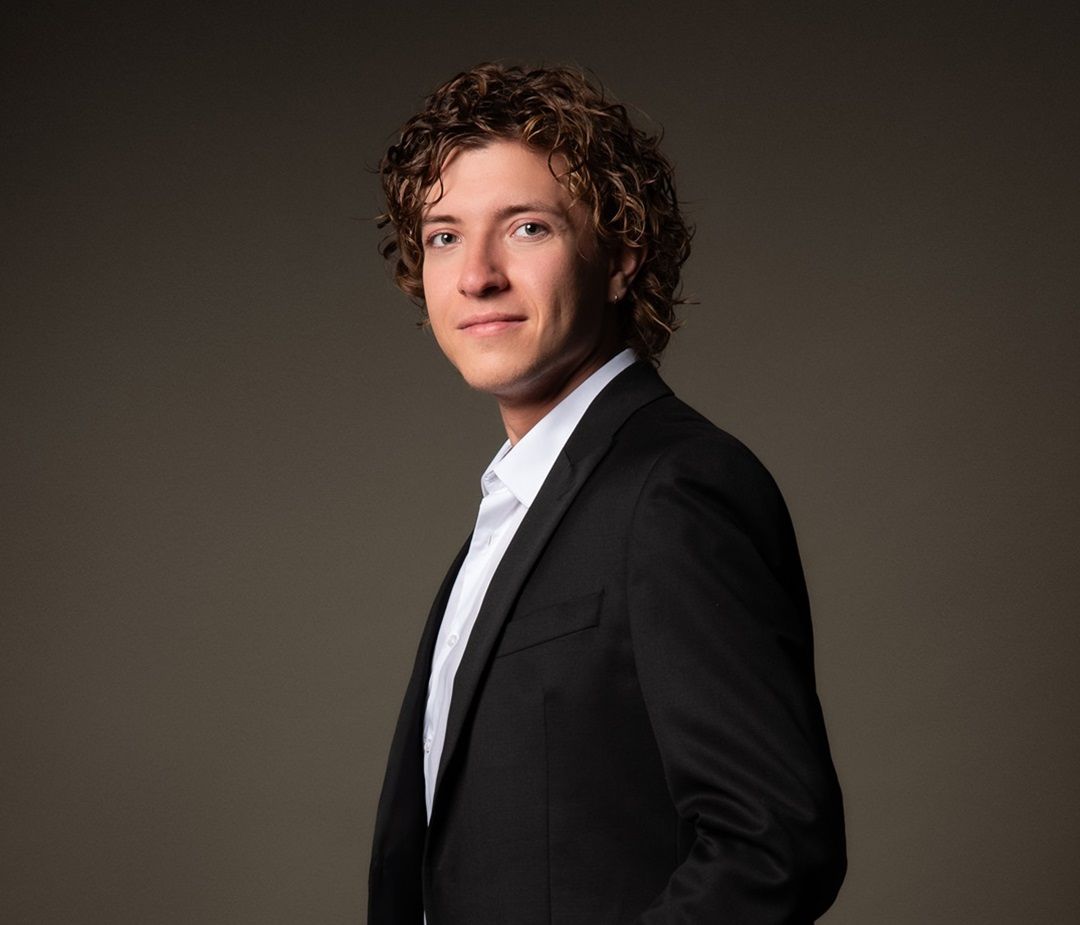
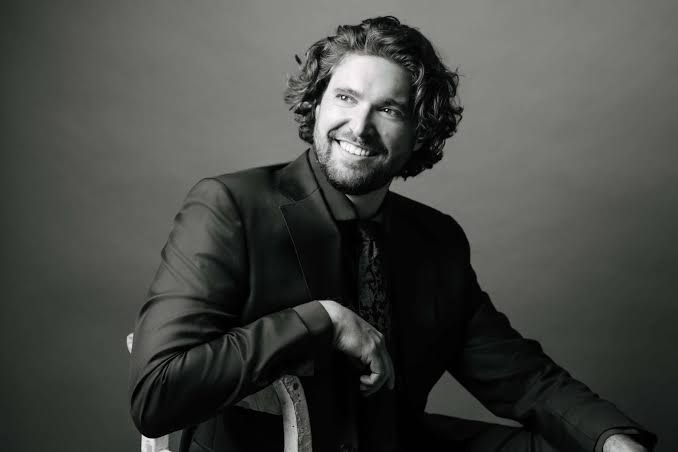
On November 20 & 21, conductor Christian Reif and the Rhode Island Philharmonic Orchestra will present RIDE OF THE VALKYRIES with pianist Estefan Iatcekiw.
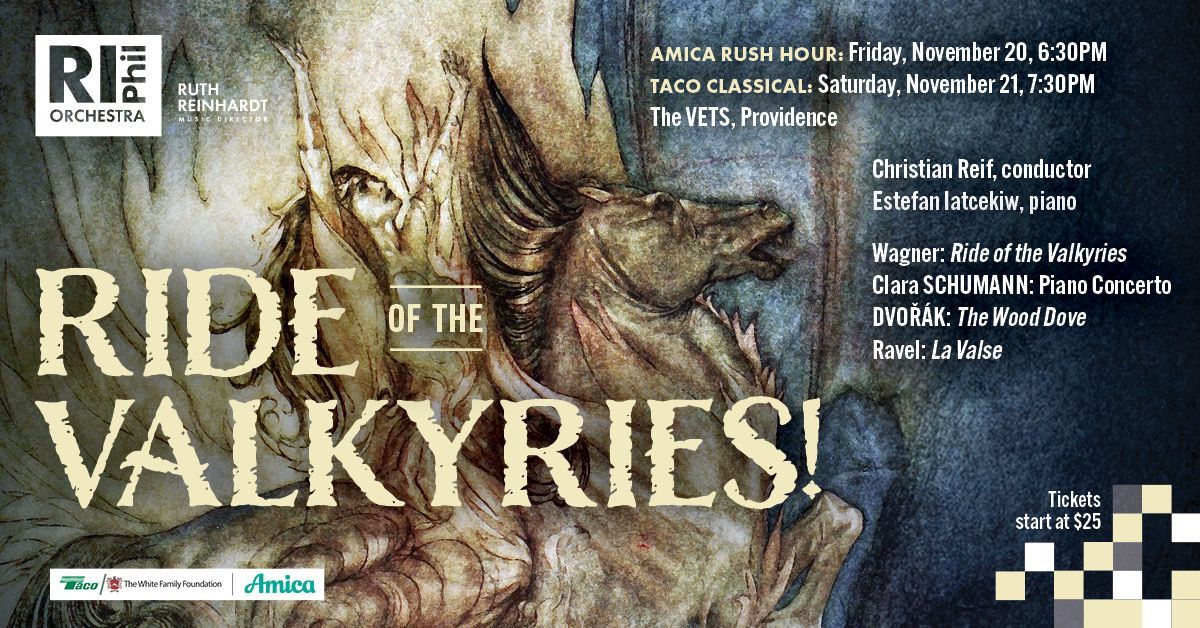

Title: Ride of the Valkyries, WWV 86b
Composer: Richard Wagner (1813-1883)
Last time performed by the Rhode Island Philharmonic:
Last performed February 20, 2016 with Larry Rachleff conducting. This piece is scored for piccolo, two flutes, two oboes, English horn, three clarinets, bass clarinet, three bassoons, six horns, three trumpets, three trombones, tuba, timpani, percussion and strings.
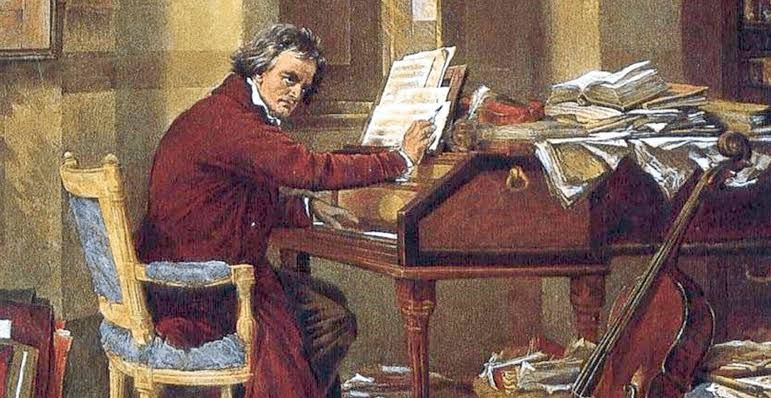
The Story: After early successes in opera, Wagner turned in the mid-1840s to a bold new theory of the art form that would permanently reshape music history. While exiled in Switzerland for his outspoken democratic and socialist views, he wrote two major essays,
Art and Revolution and
Opera and Drama. In them, he developed the idea of the
Gesamtkunstwerk, or “total work of art,” which sought to fuse music, drama, poetry, and staging into one continuous narrative rather than a sequence of separate arias and recitatives.
At the heart of this concept was a large orchestra, especially rich in winds, that spun a continuous musical texture. The orchestra became a central presence in the stage drama. It did more than accompany the singers like a Greek chorus; it also drove the action through commentary, interpretation, and foreshadowing.
The fullest expression of this style was Wagner’s four-part cycle of “music dramas,” collectively known as
The Ring of the Nibelung: Das Rheingold, Die Walküre, Siegfried, and
Götterdämmerung. Its vast, continuously unfolding story is extraordinarily intricate, yet it speaks directly to a wide range of recognizable human passions and traits. Because the orchestra’s role is so vivid and unforgettable throughout, major orchestral excerpts from Wagner operas have long been popular in the concert hall.
The best known of these excerpts is probably the “Ride of the Valkyries,” which opens Act III of
Die Walküre, the second drama in the cycle. Its main theme, a leitmotif Wagner called “Walkürenritt,” was first sketched in 1851, five years before the premiere. Recognizing its dramatic power, Wagner introduced it early in the work’s development and kept it as a central element to the finished score.
In the drama, this music sounds as the curtain rises on a mountain peak, where four of Brünnhilde’s eight Valkyrie sisters have gathered to carry fallen heroes to Valhalla. When the other four arrive, the orchestra presents the famous theme as the Valkyries greet one another and let loose their battle cries.
At first, Wagner considered independent performances of the “Ride” "an utter indiscretion" and forbade "any such thing.” But its popularity spread quickly, and publishers, ignoring his wishes, issued it to a clamoring public as a stand-alone piece. After the complete Ring was performed in Bayreuth in 1876, Wagner relented; in 1877, he even conducted it in London as an encore.
Today, excerpts from Wagner’s operas are a standard part of the orchestral repertoire, enabling many a listener who has never entered an opera house to become acquainted with the magical power of Wagner’s orchestral writing.
Program Notes by Jamie Allen © 2026. ALL RIGHTS RESERVED.
Recommended Recordings:
There are many recordings of orchestral moments from Wagner's The Ring of the Nibelungen. Two of the most thrilling are by George Szell and The Cleveland Orchestra (1968 on Columbia, now Sony Classics) and Klaus Tennstedt (1981 EMI, now Warner Classics) with the Berlin Philharmonic. Szell, of course, has precision, drive, flawless playing. Tennstedt offers drama and power, with singular anxiety and self-identification with the music. His reading of Siegfried's Funeral Music is overwhelmingly tragic, bettered only by himself in a later live performance with the London Philharmonic on their own label near the end of his career.
Tickets start at $25! Click HERE or call 401-248-7000 to purchase today!