THE STORY BEHIND: Rachmaninoff's Piano Concerto No.3
Share
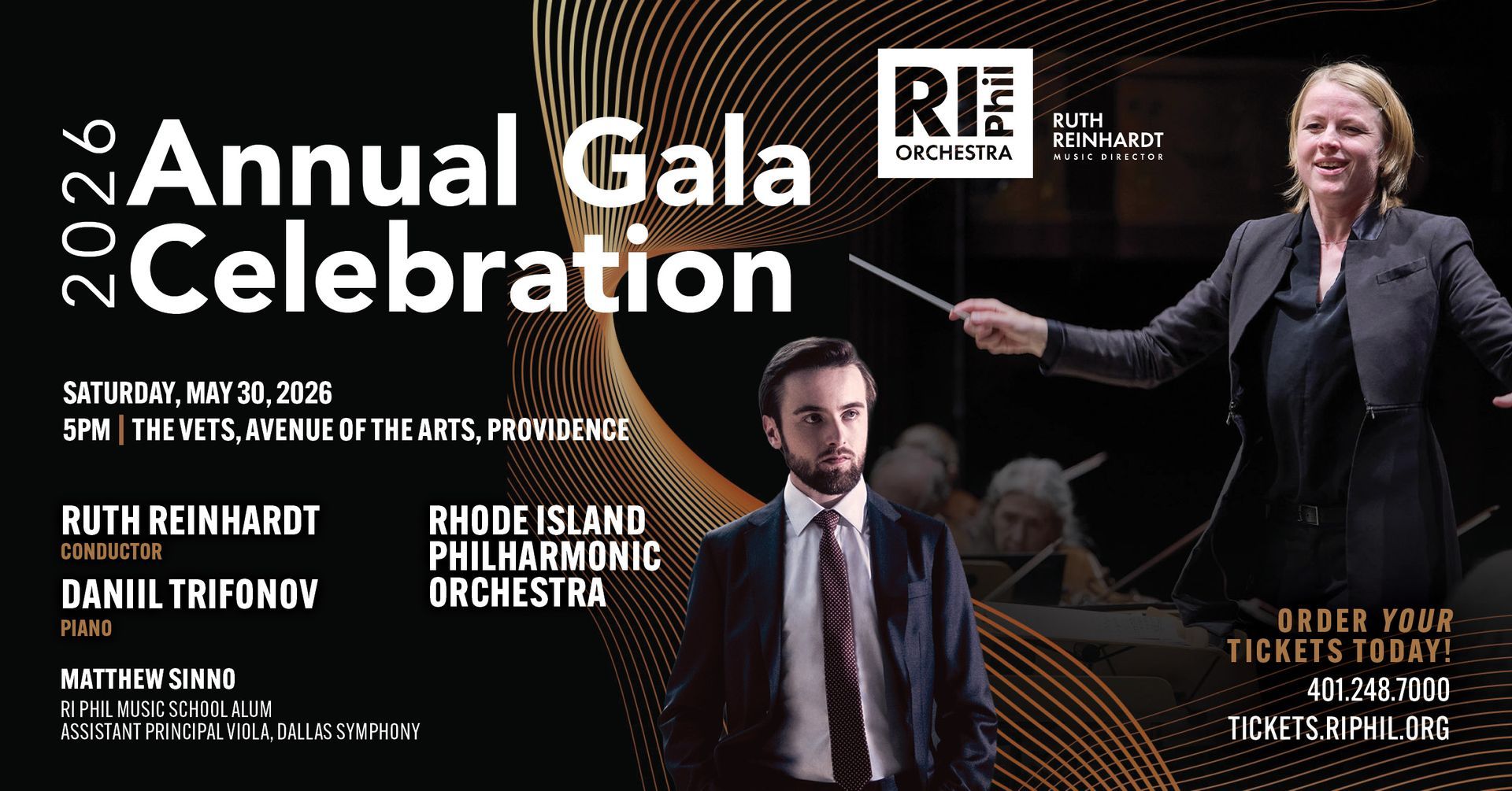
On May 30, Music Director Ruth Reinhardt and the Rhode Island Philharmonic Orchestra will present 2026 ANNUAL GALA CELEBRATION: TRIFONOV PLAYS RACHMANINOFF with pianist Daniil Trifonov.
Title: Piano Concerto No.3 in D minor, op.30
Composer: Sergei Rachmaninoff (1873-1943)
Last time performed by the Rhode Island Philharmonic:
Last performed February 10, 2024 with José Luis Gomez conducting and soloist Garrick Ohlsson. In addition to a solo piano, this piece is scored for two flutes, two oboes, two clarinets, two bassoons, four horns, two trumpets, three trombones, tuba, timpani, percussion and strings.
The Story: As Stravinsky was planting seeds that would eventually change the course of music forever, his compatriot, Rachmaninoff was preparing to set sail for his first American Tour. With him, he carried not only an enormous amount of luggage, but also a “silent keyboard,” on which he could practice his brand-new concerto. The exceptionally demanding solo part of what he called his “elephant concerto,” posed a real challenge even for a pianist of his extraordinary skill and attributes (he had unbelievably large hands – his thumb and pinkie could span 12 inches, more than most NBA players!).
Of all the great piano concertos, “Rach 3” contains the highest number of notes per second in the solo part. Yet its extraordinary demands go far beyond mere mechanical virtuosity – this arguably last great romantic piano concerto is also steeped in introspection and nuance. The melody in the opening bars, reminiscent of an ancient Russian liturgical chant, was meant, in Rachmaninoff’s own words, to “sing on the piano as a singer would.”
Over the course of its three movements, the concerto unfolds on a grand scale, with a sweeping lyricism and emotional range. The opening pianistic chant sets the stage for a series of furious climaxes from the soloist, followed by a middle movement that revolves around a beautifully developed melody in F sharp minor, offering refuge after the storm before rhythmic tensions return. But rather than quietly resolving into a traditional adagio, Rachmaninoff takes us without pause into the finale - a set of vigorous variations on themes introduced earlier, lending an organic wholeness to the entire work while it simultaneously exploits every inch of the keyboard.
Program Note by Jamie Allen © 2026. ALL RIGHTS RESERVED.
Recommended Recordings:
Tickets start at $40! Click HERE or call 401-248-7000 to purchase today!