THE STORY BEHIND: Bartók’s Viola Concerto
Share
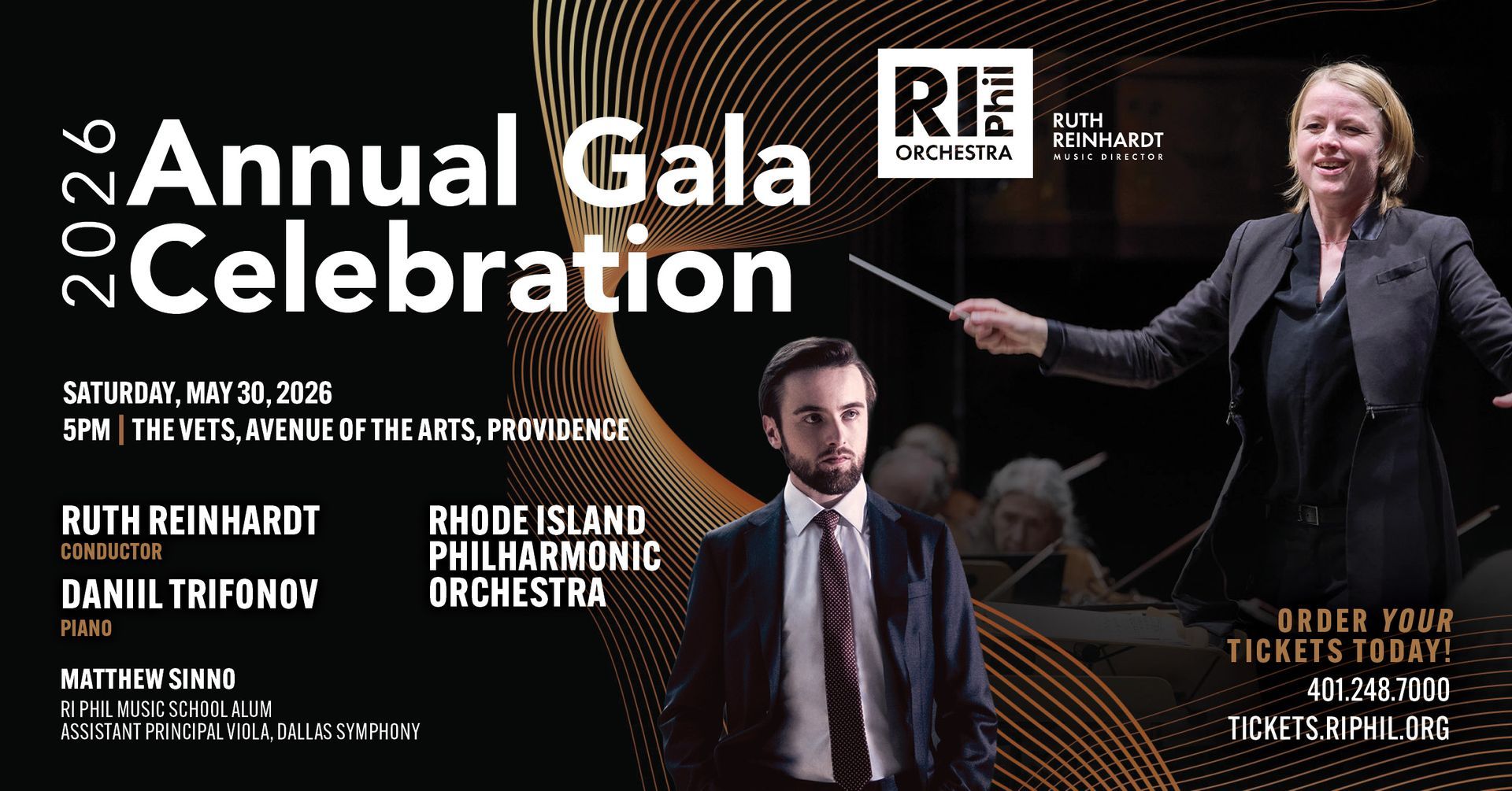
On May 30, Music Director Ruth Reinhardt and the Rhode Island Philharmonic Orchestra will present 2026 ANNUAL GALA CELEBRATION: TRIFONOV PLAYS RACHMANINOFF with pianist Daniil Trifonov.
Title: Viola Concerto, BB 128
Composer: Béla Bartók (1881-1945)
Last time performed by the Rhode Island Philharmonic:
Last performed March 14, 1998 with Larry Rachleff conducting and soloist Roberto Díaz. In addition to a solo viola, this piece is scored for three flutes, piccolo, two oboes, two clarinets, two bassoons, three horns, three trumpets, two trombones, tuba, timpani, percussion and strings.
The Story: In the mid-1940s, Béla Bartók’s body was failing him. But thanks to a timely commission from Serge Koussevitsky, the visionary music director of the Boston Symphony at the time, the composer’s creative energies were at an all-time high. The commission resulted in the monumental Concerto for Orchestra, a joyous and brilliant piece universally acknowledged as one of the masterpieces of the
20th
Century. Bartók found the mere process of writing it so healing and energizing , that he soon immersed himself in composing two more major concertos in quick succession: A third Piano Concerto (written as a showcase and potential income stream for his wife, Ditta, a renowned concert pianist in her own right), and a Viola Concerto, written for the widely revered violist William Primrose.
In a letter to Primrose, penned only a few weeks before the composer’s death, Bartók wrote:
"I am very glad to tell you that your viola concerto is ready in draft…Many interesting problems arose in composing this work. The orchestration will be rather transparent, more transparent than in a violin concerto. Also, the somber, more masculine character of your instrument exerted some influence on the general character of the work...It is conceived in a rather virtuoso style. Most probably some passages will prove to be uncomfortable or unplayable…"
Primrose himself, in his autobiography, recalls this letter and the unfortunate series of events that soon followed:
"It was my intention…to stop on my way north to see Bartók in New York City. But as it was raining heavily on that day and parking was an insoluble problem, I decided to proceed to my destination and see him on my return. It was a deplorable decision, one which we all experience when we put off until tomorrow… On a beautiful day about two weeks later, on my way back from Maine, I stopped outside New York for lunch, picked up the New York Times, and read that Bartók had died the preceding day."
As the orchestrations for the viola concerto were left incomplete, Tibor Serly, an apprentice and good friend of Bartók’s, was tapped to prepare the highly anticipated work for performance and publication. Serly shared his own memories of the circumstances surrounding the Viola Concerto in a tribute published in the New York Times:
"When I last talked with Béla Bartók, he was lying in bed, quite ill. Nevertheless, on and around his bed were sheets of score and sketch manuscript papers...my attention was drawn to the night table beside his bed where I noticed, underneath several half-empty medicine bottles, some pages of sketches. There was a reason for my curiosity, for it was known that earlier in the year he had accepted a commission to write a concerto for viola and orchestra for William Primrose… Bartók nodded wearily toward the night table, saying: “Yes, that is the viola concerto.” To my question as to whether it was completed, his reply was, “Yes and no.” He explained that while in sketches the work was by and large finished, the details and scoring had not yet been worked out."
In this concerto, Serly, Primrose, Antal Dorati (who conducted the premiere in December of 1949), and countless music lovers to follow, discovered a profoundly lyrical, spiritual and life affirming work. Tonight, we will hear the final two movements, performed by RI Phil Music School Alumnus Matthew Sinno, as they evolve from moments of great reverence and pathos to infectious expressions of folk-inspired exuberance. Listen for what just might be a Scottish-inspired tune and bagpipe-like drones (a possible nod to William Primrose’s heritage), as seen through a Central European
20th
century lens. There is good reason that this is the most performed and recorded viola concerto in history.
Program Note by Jamie Allen © 2026. ALL RIGHTS RESERVED.
Recommended Recordings:
Tickets start at $40! Click HERE or call 401-248-7000 to purchase today!