THE STORY BEHIND: Mozart's Symphony No.38 (Prague)
Share
On April 11, conductor Ken-David Masur and the Rhode Island Philharmonic Orchestra will present ALL MOZART with pianist Robert Levin.
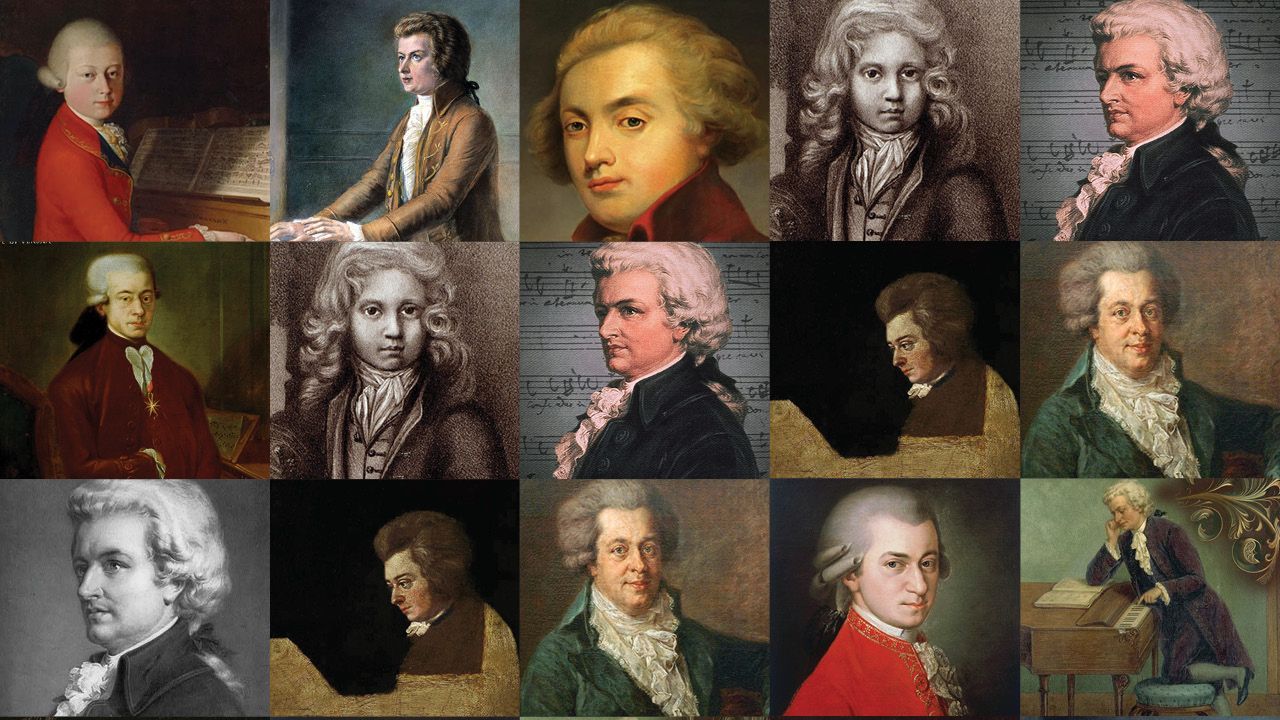
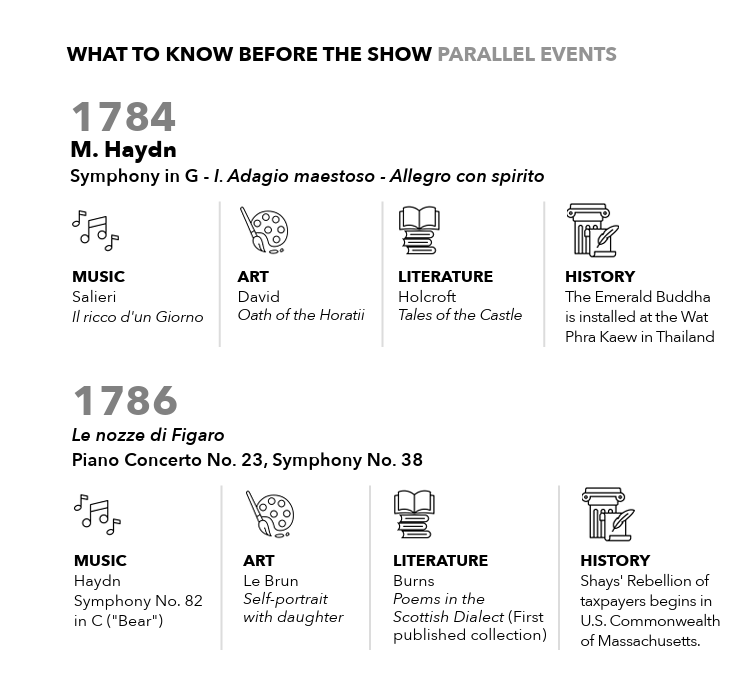
Title: Symphony No.38 in D major, K.504 (Prague)
Composer: Wolfgang Amadeus Mozart (1756-1791)
Last time performed by the Rhode Island Philharmonic:
Last performed March 15, 2003 with Larry Rachleff conducting. This piece is scored for two flutes, two oboes, two bassoons, two horns, two trumpets, timpani and strings.
The Story: Looking to distance himself from the snobbishness and political intrigues of Vienna in 1786, Mozart decided to hit the road and take
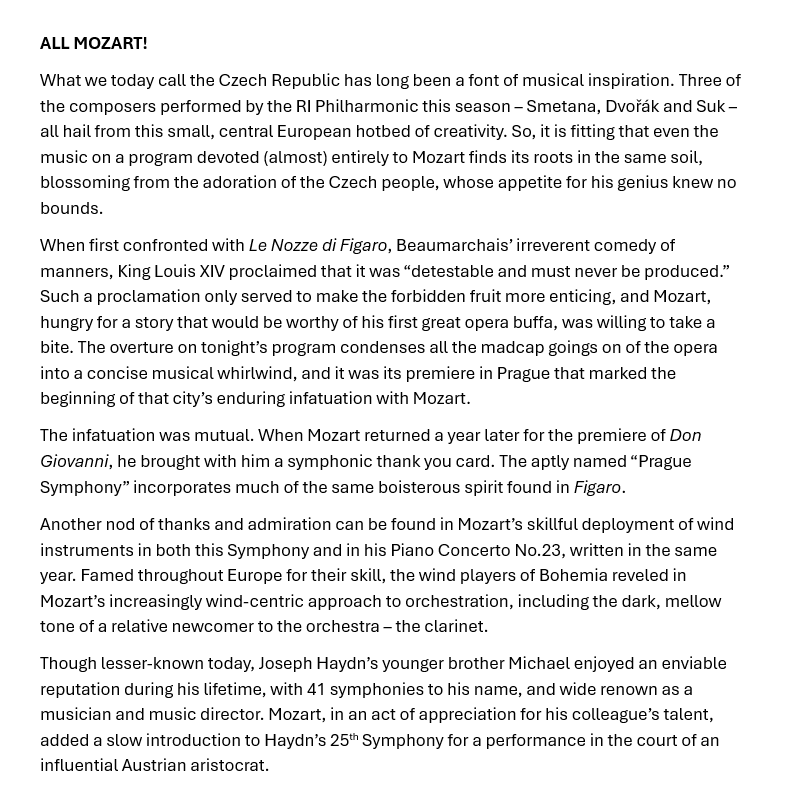
The Marriage of Figaro to Prague. The opera caught on like wildfire, and the people of this intensely musical city never looked back. Even today, nearly a quarter of the concerts that take place daily in the Czech capital include something written by Mozart. It’s almost a law.
Even before he and his wife first entered the city gates, Mozart’s reputation preceded him. The customs officer on duty, after looking at the composer’s passport, asked if he was the genius behind
Figaro.
The opera was such a success that the opera manager, Pasquale Bondini, commissioned a new opera from him, which was to become Don Giovanni. He returned to Prague less than a year later, with not one but two new scores under his arm: the nearly completed new opera, and a fully completed new symphony, nicknamed the “Prague.” He took up lodgings in a residence where today a plaque proclaiming “V tomto domě bydlel Mozart v roce 1787” (“In this house lived Mozart in the year 1787”) proudly hangs. He also spent fruitful time finishing up
Don Giovanni as a guest in a charming villa known as Bertramka, where he would, in fact, spend many happy days in the coming years. Betramka is now a cherished museum dedicated to the composer’s memory.
Don Giovanni
premiered to wild acclaim in October of that year, and went on to be such a success that he lived on income from its performances for the rest of his days (though it never quite solved all of his considerable financial woes).
Like the piano concerto, the “Prague” symphony is in three movements (rather than four, which had become the vogue for symphonies in that day). During his time there, Mozart had discovered that the people of Prague preferred them that way, and so he took pains to give the good people what they wanted. This symphony is also one of the few that feature a slow introduction to the first movement, a common practice for Haydn but rare for Mozart. From a stately and dignified
Adagio
that gives due deference to the city’s leaders, Mozart moves to an
Allegro
that sparkles with all the fun that Czech audiences had come to expect from their idol.
In the
Andante
second movement, listen again for the masterful treatment Mozart gives the woodwinds. In his hands (and ears) the winds no longer simply provide color to the orchestra, but are now a crucial part of its beating heart. Slipping deftly between moments of sweetness and melancholy, repose and urgency, Mozart achieves an almost incomprehensible balance between delicacy and depth.
Then, in a nod to the Bohemian craze for all things
Figaro, Mozart opens the Finale of the symphony with a clever echo from one of its popular arias, and uses it as a springboard from which to launch the entire movement. Mozart keeps things delightfully off kilter with insistent syncopations and a relentless invention that foreshadows Beethoven. In the words of one contemporary concertgoer, “the very soul is carried to sublime heights.”
Program Notes by Jamie Allen © 2025 ALL RIGHTS RESERVED.
Recommended Recordings:
Some very fine recordings offer different approaches: Karl Böhm with the Berlin Philharmonic (full-bodied on Deutsche Grammophon), Sir Colin Davis (polished elegance on Phillips), Pablo Casals (highly individualistic on Sony), Josef Krips and the Concertgebouw (a complete survey of the Symphonies on Phillips with exquisite transparency) and Bruno Walter (beautifully phrased on Sony.) Most of these include Mozart's five other final symphonies. Having a full set of them is certain to delight.
Tickets start at $25! Click HERE or call 401-248-7000 to purchase today!