THE STORY BEHIND: Wagner's "Tristan and Isolde" - Prelude and Liebestod
Share
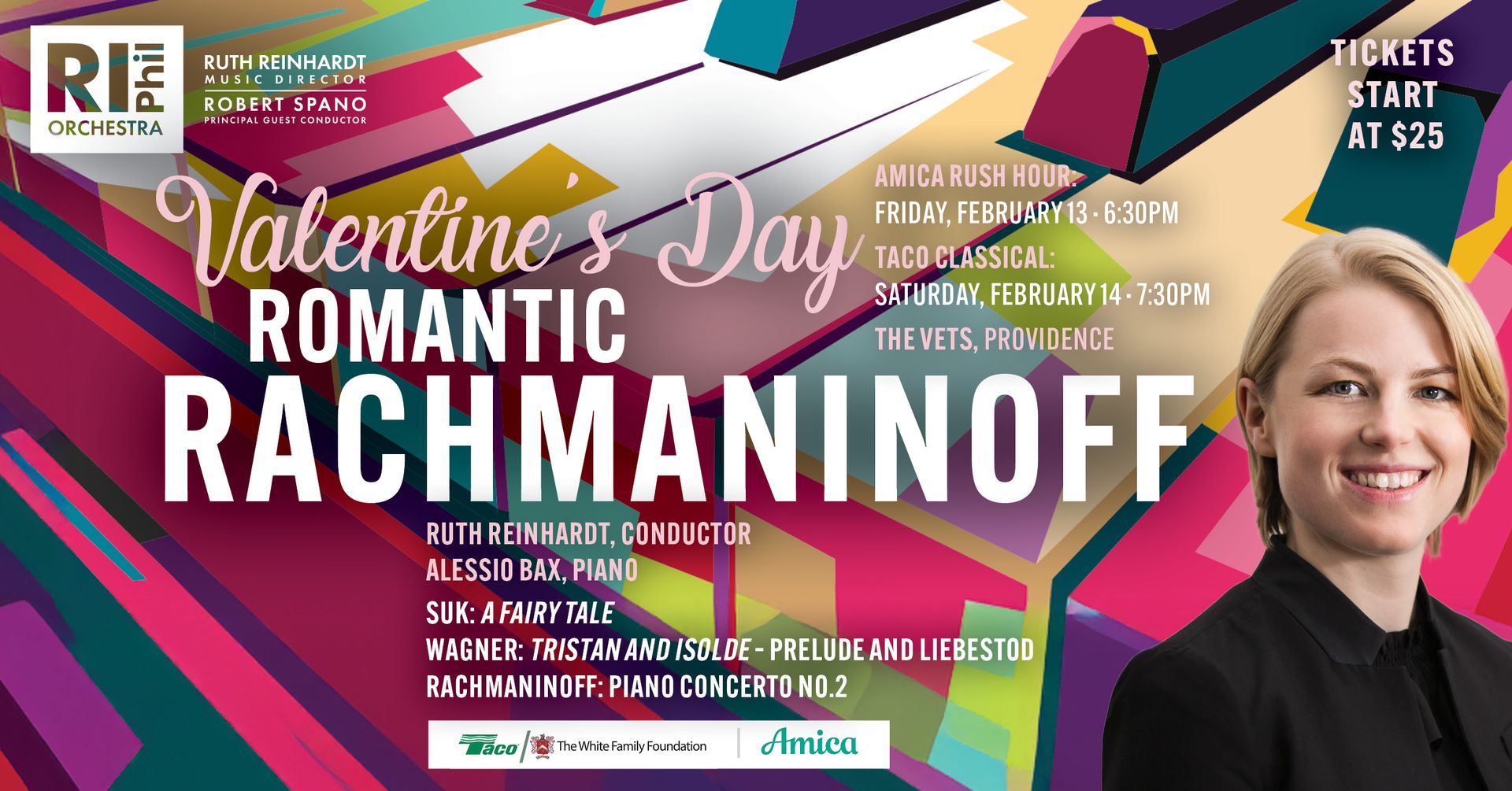
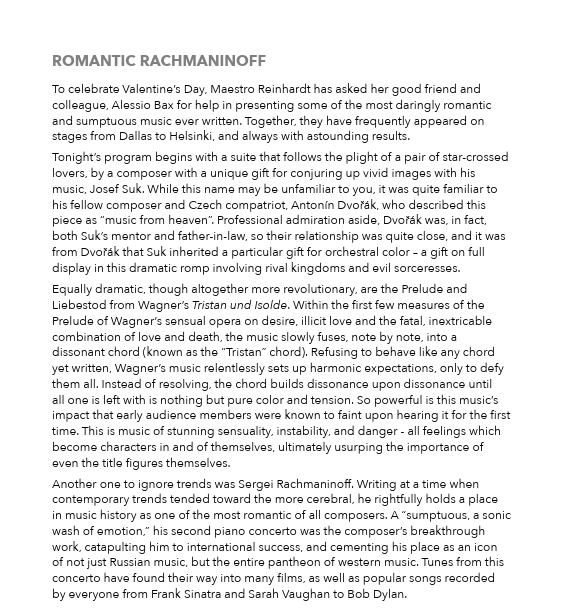
On February 13 and 14, Music Director Ruth Reinhardt and the Rhode Island Philharmonic Orchestra will present ROMANTIC RACHMANINOFF with pianist Alessio Bax.
Title: Tristan and Isolde - Prelude and Liebestod
Composer: Richard Wagner (1813-1883)
Last time performed by the Rhode Island Philharmonic:
Last performed February 15, 2020 with Alexander Mickelthwate conducting. This piece is scored for piccolo, three flutes, two oboes, English horn, two clarinets, bass clarinet in A, three bassoons, four horns, three trumpets, three trombones, tuba, timpani, harp and strings.
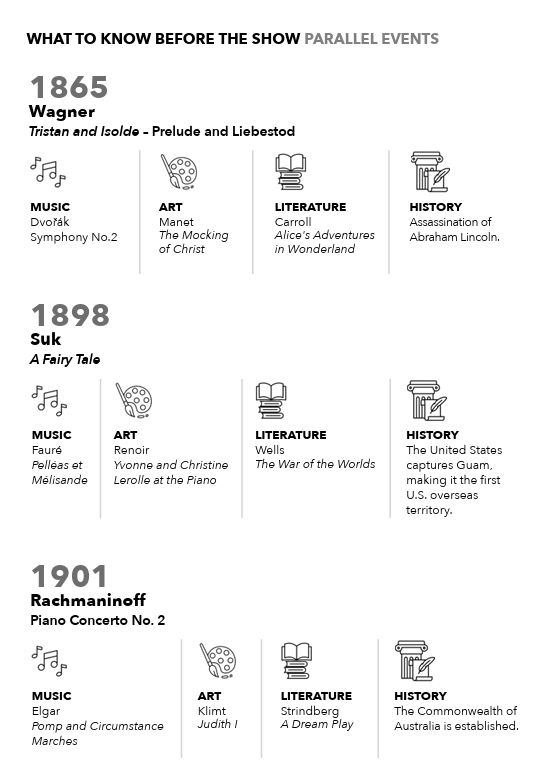
The Story: Standing at the beginning and end of Wagner’s sensual masterpiece Tristan und Isolde, the Prelude and Liebestod have enjoyed lives as independent concert pieces since even before the opera’s premiere in 1865. Taken together as one, their fusion remains today one of Wagner’s most beautiful and acclaimed works.
From the very outset of the Prelude, as celli and winds dovetail upon each other to build a series of shape-shifting chords, one can sense that Wagner is casting a new spell. In these first few measures, Wagner has been credited with nothing less than “reinventing the art of music.” Apparent dissonances do not “behave” as they should. Indeed, the entire concept of dissonance seems to be irrelevant as chords move with their own internal sense of gravity, each one leading inexorably to the next in a manner that sets the stage for an entire century of new ideas in music.
Traditional harmony is all about expectations. Certain progressions set up expectations for a particular conclusion, and it is the composer’s decision to fulfill that expectation or not. But the story of Tristan und Isolde
is all about (in Wagner’s own words) “hopes and fears, laments and desires, bliss and torment.” These are not emotions that are easily resolved, so Wagner makes the deliberate choice to confound expectations in a way that is equal parts tantalizing and revolutionary. No longer does a chord have to move in a limited number of ways. It can simply exist as coloration or, in this case, the stress of insatiable longing. The effect of this new view of harmony was so shocking to its first audiences that people were said to have fainted on the spot. This is music of instability and danger – exactly what Wagner was hoping to achieve. Only music this extreme could adequately represent the angst and torture of unfilled love experienced by the opera’s title characters.
The orchestral Liebestod (“love-death”), begins with soft, tentative echoes of the Prelude. A bass clarinet moves in slow-moving waves with the horns, as trembling strings enhance a palpable sense of yearning, and beautifully written harp arpeggios herald a thickening of the orchestral texture. In time, the opening material is transformed into a passionate rhapsody, ultimately accelerating to a massive climax. At this point in the opera Tristan has died, and Isolde falls over his body. Bliss, for them, is only attainable through death. The Liebestod concludes with a musical acceptance of this reality, gradually fading into one final, glimmering chord.
Program Notes by Jamie Allen © 2025 ALL RIGHTS RESERVED.
Recommended Recordings:
In the orchestral version performed in these concerts, Wagner's Prelude and Liebestod from Tristan and Isolde can be heard from nearly all the great conductors: Furtwängler (EMI), Toscanini (RCA), George Szell (Sony), Bernard Haitink (Philips), Pierre Boulez (Sony) - the list goes on. Herbert von Karajan made a sumptuous recording with the Vienna Philharmonic and Jessye Norman singing the Liebestod (Deutsche Grammophon.) For those who would like to explore the complete opera, recommended recordings are by Wilhelm Furtwängler with Kirsten Flagstad from 1952 (Warner) and Karl Böhm with Birgit Nilsson and Wolfgang Windgassen at the 1966 Bayreuth Festival (Deutsche Grammophon.)
Tickets start at $25! Click HERE or call 401-248-7000 to purchase today!